

Imagine you’re hosting a dinner party. You’ve invited friends, colleagues and neighbours. You want everyone to feel welcome, enjoy the food, and have a great time. But what if you left everything to chance? Some guests would feel neglected, others confused, and the whole evening would be a flop.
Employee Experience (EX) is just like that. It happens whether you plan it or not. To make it meaningful and memorable, you must be intentional, detailed, and personal. Don’t leave it to chance. Make it exceptional.
Many people think creating a great EX is easy, whether you plan it or not. In reality, it’s much more complex than lighting some candles and setting the mood. Let’s look at some common myths about EX and how they tie into your Employee Journey Mapping process.
One size fits all
Reality check! Personalisation is key. Imagine being handed a uniform that doesn’t fit and being expected to wear it every day. Frustrating, right? This is what a one-size-fits-all EX strategy feels like to employees.
Personalisation is crucial because it acknowledges and caters to the unique needs and preferences of each employee. When you tailor the employee experience, you show that you value each individual, which significantly boosts engagement and retention.
It’s not all about the big picture
Micro-moments matter. Think about your last great customer service experience. It probably wasn’t one grand gesture but a series of small, positive interactions. The same applies to the employee journey. These micro-moments, like a thoughtful onboarding process or timely recognition of good work, add up to a powerful overall experience.
Employee journey mapping is just HR’s job
Sure, HR plays a big role in shaping EX, but relying solely on HR to handle everything is like expecting one person to steer an entire ship. Engaging managers and team leaders in the process spreads the responsibility and ensures that the employee journey is continuously nurtured at every level. Besides, who better to identify the moments that matter than those who are IN the moment.
Breaking down the steps (the unconventional way)
To truly understand the moments that matter, break down each step of the employee journey. Here’s how.
Engage at all levels
Make sure that you get a balanced view of all the moments that matter by tapping into employees throughout the organisation and at all levels. What is not that important to a manager may be a deal-breaker to someone further down the ladder.
Map the mundane
Don’t just focus on major milestones. The daily grind is where the magic (or frustration) happens. For instance, how streamlined is your employee’s daily workflow? Are they equipped with the right tools? Do they know how to USE the tools?
Create career flexibility
Traditional career ladders are out, think of career pathways as a web of opportunities. Allow employees to explore different roles and departments. For example, a marketing associate interested in data analytics should have opportunities to gain experience in that field.
VOE strategy 2.0
Traditional surveys are outdated. Use real-time sentiment analysis tools and open feedback channels, and build a culture that thrives on listening and acting on employee input. Implementing an anonymous suggestion box can lead to actionable insights that might otherwise go unnoticed. A survey’s effectiveness depends on the quality of its questions. Often, we only ask about what we consider important.
Feedback: let's make it a fun formality!
Make feedback fun and continuous. Annual reviews? So last decade. Instead, create a culture where feedback is continuous and part of the daily workflow. For example, a quick chat after a team meeting about what went well and what could be improved can be incredibly effective. If someone has something to say afterwards, it means the meeting is not concluded and you should all go back. High-performance teams often put this into practice.
Employee voices should extend beyond tokenism. Your people’s voices should form part of shaping company policy, especially on social and environmental issues. This is not just ticking a box. It’s about genuinely valuing their input. For instance, if employees suggest more eco-friendly practices, act on it. This not only improves engagement but also demonstrates that the company values its employees’ opinions. Even if it’s something as small as using re-usable coffee filters rather than paper ones.
We can throw all this information at you, but it means nothing without a clear place to apply it and a path to action. That’s where employee journey mapping comes in.
Charting the employee journey and finding the bumps in the road
What is journey mapping?
Employee Joureny Mapping is a process of visualising all the significant experiences and moments that matter to your employees throughout their relationship with your organisation. From their first glance at your career portal to their final exit interview, every step is an opportunity to enhance connection, trust and meaning.
Why should you do it?
- Alignment
Validate that the experiences you provide align seamlessly with your , reinforcing the distinct feelings and beliefs you wish to evoke. - Opportunity identification
Pinpoint what’s working and where the gaps lie, setting the stage for innovative solutions and enhancements. Many moments that matter will be scalable across the organisation. - Enhanced collaboration
Break down silos and create a unified view of your employee experience, enabling every team member to contribute effectively. - Strategic insights
Gain a clearer understanding of success metrics and reporting, helping you make data-driven decisions to boost employee satisfaction and retention.
What does it involve?
An employee journey map typically involves a detailed visual representation of an employee’s experience within an organisation, from start to part. It starts with understanding and defining different employee personas to capture their unique needs and expectations. Take a look at how we see it.
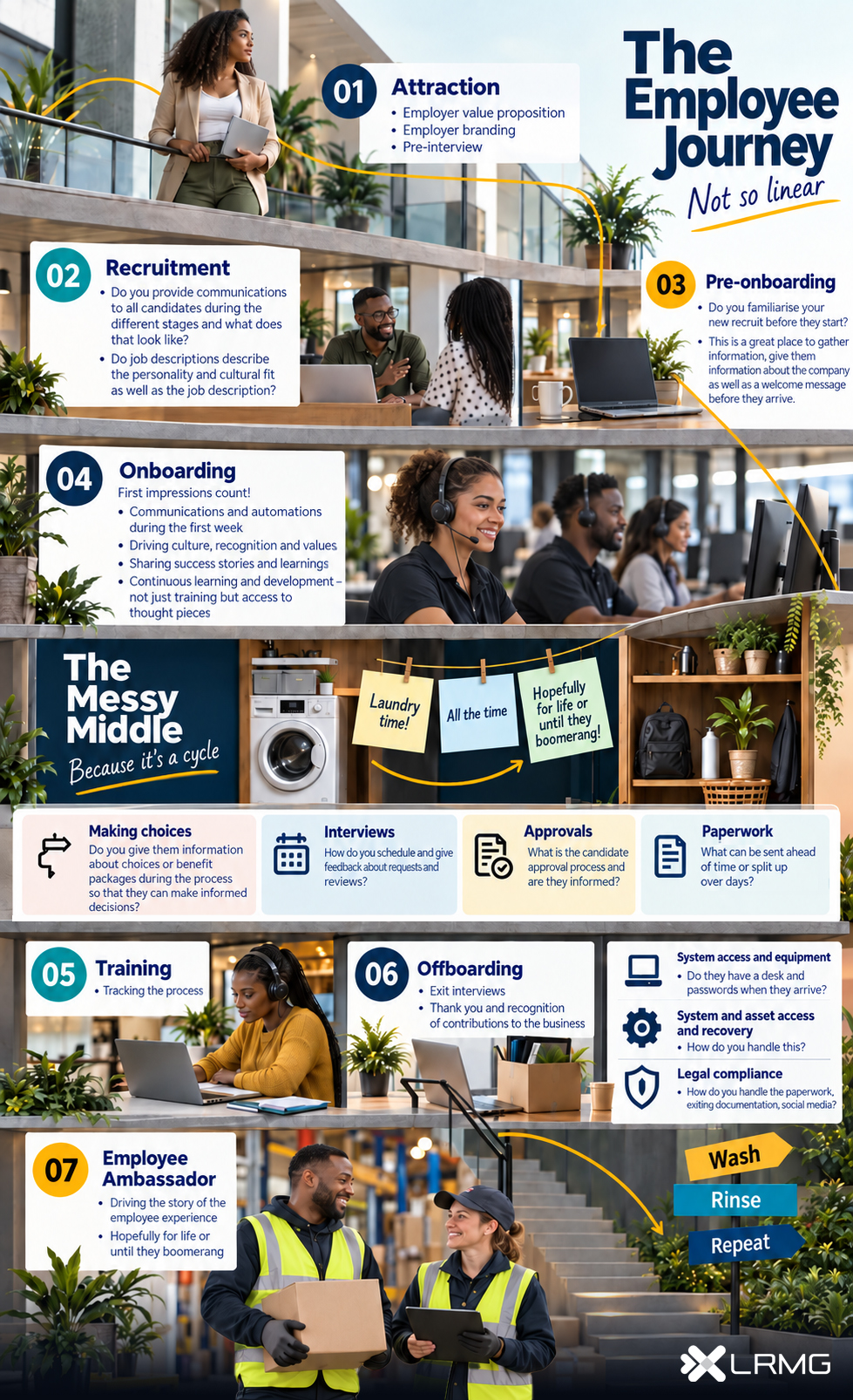
Meaningful moments always stir up emotions. If you can pinpoint when and where people feel strongly, whether those feelings are positive or negative, you’re already halfway to understanding what’s important to them. The process includes mapping out key touchpoints and critical moments that matter, such as onboarding, performance reviews and career development opportunities. By gathering data through surveys, interviews and workshops, you identify pain points and areas for improvement.
Gartner describes “moments that matter” as the personal and work-related touchpoints employees have with their organisation along their career journey. Have you considered which moments matter most to your people? How prepared is your organisation to handle them? It’s during these moments of crisis and change that the true nature of your organisation is revealed.
It’s feedback loops and ongoing assessments that ensure the employee experience evolves with changing needs. Ultimately, it serves as a strategic tool that guides organisations in creating a supportive, engaging and productive work environment.
What will you get out of it?
Share the responsibility
While it’s crucial to involve managers and team leaders, consider integrating EX responsibilities into unlikely areas of your organisation.
- Peer mentorship programmes
Encourage employees to mentor each other. This creates a sense of ownership and promotes a culture of continuous improvement. - Employee experience ambassadors
Appoint ambassadors from different departments to champion EX initiatives. These ambassadors can provide unique insights and foster cross-departmental collaboration. - EX hackathons
Organise regular hackathons where employees brainstorm and prototype EX improvements. This not only generates innovative ideas but also engages employees in shaping their work environment.
Be intentional with micro-experiences
Instead of focusing solely on major milestones, enhance the smaller, everyday experiences that can significantly impact employee satisfaction.
- Surprise and delight
Introduce small, unexpected perks like spontaneous team lunches, desk drops, surprise half-days, or personalised thank-you notes. These little gestures can boost morale and make employees feel valued. - Random acts of kindness
Implement a programme where employees can anonymously send small gifts or notes of appreciation to colleagues, fostering a culture of kindness and gratitude.
Reinvent measurement with innovative tools
Go beyond traditional surveys with these measurement techniques.
- Sentiment analysis of internal communications
Use AI to analyse the tone and sentiment of emails and chat messages. This can provide real-time insights into employee morale and highlight areas needing attention. - Experience Sampling Method (ESM)
Regularly prompt employees to provide feedback on their current experience at random times throughout the day. This method captures in-the-moment sentiments and provides a more accurate picture of daily experiences. - Employee experience dashboards
Create interactive dashboards that visualise real-time data on employee satisfaction, engagement and performance. Share these dashboards with employees to promote transparency and collective responsibility.
What’s in it for me? (WIIFM or us)
Personalising the employee experience requires understanding their unique motivations.
- Career adventure programmes
Offer rotational programmes that allow employees to explore different roles and departments. This not only broadens their skills but also keeps them engaged and motivated. - Personal development funds
Provide each employee with a fund they can use for personal growth, whether that means attending a course, buying books, or even pursuing a hobby. This shows that you care about their development beyond just work skills. - Customised rewards
Tailor rewards and recognition to individual preferences. Some employees might prefer public recognition, while others might value private acknowledgment or tangible rewards.
To truly excel in EX, you must view the journey as a collective yet individualised adventure, much like a bus ride to a shared goal. Just as passengers on a bus might have varying experiences based on their seats, the time of day, or their companions, employees will have diverse encounters based on their roles and interactions within the company.
Planning ahead and adjusting for these factors ensures that everyone feels valued and appreciated. While the journey may not always be filled with breathtaking views, actively listening to and supporting employees can highlight the silver linings, making the overall experience more rewarding for everyone involved. Your approach to mapping out the employee journey should ensure that every twist and turn is navigated with care, creating a sense of belonging and engagement throughout the organisation.

Next Step
Map the moments
that matter
See a priority employee journey from end to end and identify where the experience, handovers and support need attention.
Frequently Asked Questions (FAQs)
What is employee journey mapping?
Employee journey mapping visualises the significant experiences and moments employees encounter across their relationship with an organisation. It can span attraction, recruitment, onboarding, everyday work, growth and exit, helping teams see what people experience, where friction sits and which moments deserve attention.
Why do the small moments matter in an employee journey?
Employee experience is built through many small interactions, not only major milestones. Everyday moments such as getting the right tools, receiving recognition or navigating a handover can strengthen or weaken connection and trust. Journey mapping makes those micro-experiences visible so teams can decide what is worth protecting or improving.
Who should be involved in employee journey mapping?
Journey mapping should not sit with HR alone. Managers, team leaders and the functions that shape key touchpoints should be involved, along with employees from different levels and workforce groups. A cross-functional view helps expose handovers, gaps and moments that one team may not see on its own.
What evidence should be used in an employee journey map?
Use a mix of employee evidence, including surveys, interviews, workshops, listening channels and feedback from specific moments. Personas can help show how needs differ across workforce groups. The aim is to understand both the touchpoints people encounter and the emotions, friction and meaning attached to them.
How does employee journey mapping support employee experience strategy?
Journey mapping gives leaders a practical view of where employee experience is being shaped. It can reveal moments that support performance, areas of friction and gaps between the employer promise and lived reality. Those insights can help an EX strategy prioritise where change will make the greatest difference.
- By Sally Acton , Chief Experience and Innovation Officer, LRMG Sally Acton is Chief Experience and Innovation Officer at LRMG. She works with organisations across Employee Experience, Employer Brand and EVP, and Inclusion and Culture, helping leaders turn employee insight into practical strategies, journeys and experiences that people can feel in everyday work.